SolidWorks CSWP/CSWA/CSWA-S/CSWA-AM/CSWA-SD/CSWA-E || CFD & FEA on Ansys || CNC/Conventional Machining || Thermofluid Systems
I design, simulate, and manufacture mechanical systems - from hydraulic turbines to biogas power conversions - grounded in structural mechanics, computational fluid dynamics, and hands-on fabrication. Ranked Best Student in Mechanical Engineering for three consecutive years at Dedan Kimathi University of Technology, and a Certified SOLIDWORKS Professional (CSWP).
Mechanical Engineering, BSc · Expected 2027
Dedan Kimathi University of Technology
I'm a mechanical engineering student building toward a career in design, simulation, and manufacturing. My work spans hydraulic and thermofluid system design — including complete hydraulic dimensioning for a 10 kW crossflow turbine — through to hands-on CNC machining, foundry and casting quality control, and structural welding, developed across industrial attachments at Numerical Machining Complex and Associated Motors Limited.
I approach every design the same way: parametric CAD in SolidWorks and Autodesk Inventor, validated through CFD in Ansys Fluent and FEA in Ansys Workbench, and where relevant, verified against physical fabrication constraints — because a design that can't be machined, cast, or welded to spec isn't finished. My coursework at DeKUT reflects that same breadth: mechanics of machines and structural mechanics, thermodynamics and fluid mechanics with hydraulic and turbomachinery design, and statistical design of experiments in MATLAB and Minitab.
Alongside mechanical work, I maintain a secondary technical skillset in software and cybersecurity — Python, C/C++, Flutter/Dart, SQL, and Cisco-certified ethical hacking fundamentals — which I apply to data analysis, automation, and understanding the digital systems increasingly embedded in mechanical equipment.
Thermofluid systems, manufacturing,
and applied engineering research

Led runner sizing and overall design of a 10 kW Michell-Banki crossflow turbine for off-grid rural electrification, developed with a 3-member team and selected over Pelton/Kaplan designs for its self-cleaning, low-head performance.
Design ProposalMy role: Led runner sizing and the overall turbine design within a 3-member team, covering the hydraulic and geometric calculations that defined the rest of the system.
Problem: Rural communities near small rivers often have real hydraulic potential but rely on diesel generators or biomass, since most turbine technologies are too costly or unsuited to low-head, silt-heavy conditions.
Why crossflow: Compared against Pelton (needs >50 m head — impractical for rural sites) and Kaplan (high efficiency but complex, precision-dependent, and cavitation-prone), the crossflow topology was selected for its low-to-medium head range, basic local maintainability, and low cost.
Status: Design and analysis complete as a Machine Design course proposal; physical fabrication is the next planned phase.

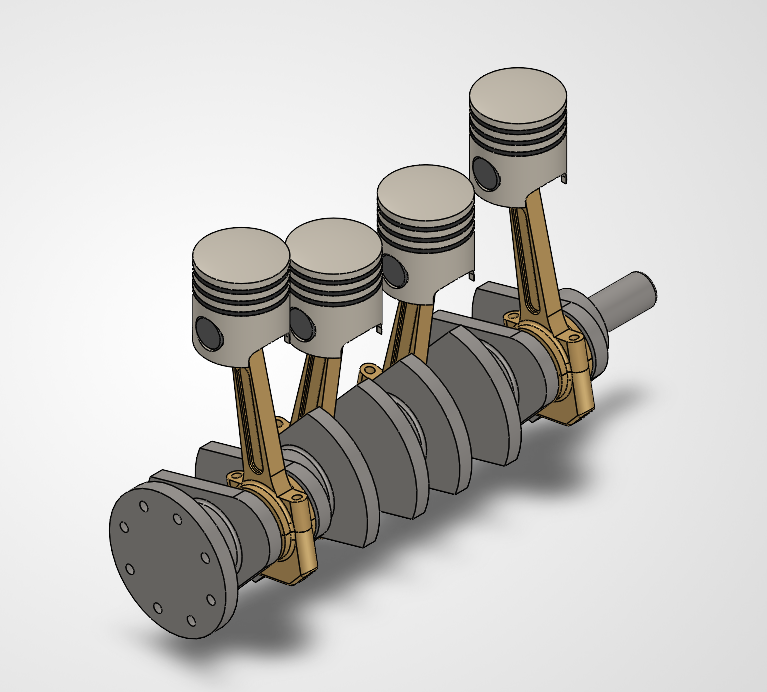
Converted a gasoline engine to run on biogas for 5 kW power generation, redesigning the fuel-air mixing system, ignition timing, and compression ratio for stable combustion.
In progressConversion approach: Adapted a standard gasoline engine to run on biogas by replacing the carburetor with a gas-mixing (venturi-type) valve suited to biogas's lower calorific value and slower flame speed.

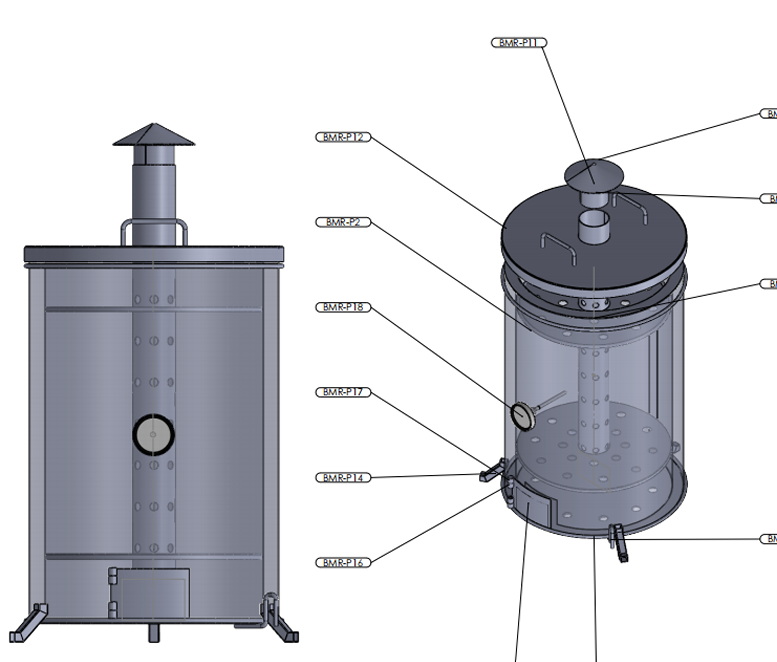
Developing carbonized briquettes from coffee husk waste as a renewable, eco-friendly alternative to wood charcoal — reducing deforestation while turning an abundant coffee-processing byproduct into usable cooking fuel.
In progressProblem: Kenya's reliance on wood charcoal for household cooking drives deforestation and emissions, while coffee husks — a large-volume processing byproduct — are largely discarded rather than reused.
Approach: Coffee husks are carbonized and formed into briquettes with a suitable binder using a fabricated briquetting machine, then evaluated against key fuel-performance properties:
Goal: A durable, energy-saving briquette that cuts agricultural waste and reduces reliance on charcoal from wood, supporting renewable energy and sustainable use of agricultural residues.

A thermochemical extrusion system converting recycled LDPE plastic and river sand into interlocking paving tiles — a lighter, more durable, and more cost-effective alternative to concrete "cabro" blocks.
Proposal StageConcept: Re-Block addresses two problems at once — Kenya's growing plastic waste crisis and the structural shortcomings of traditional concrete masonry — by converting recycled LDPE and sand into interlocking tiles via a proprietary extrusion process operating at 180–220°C.

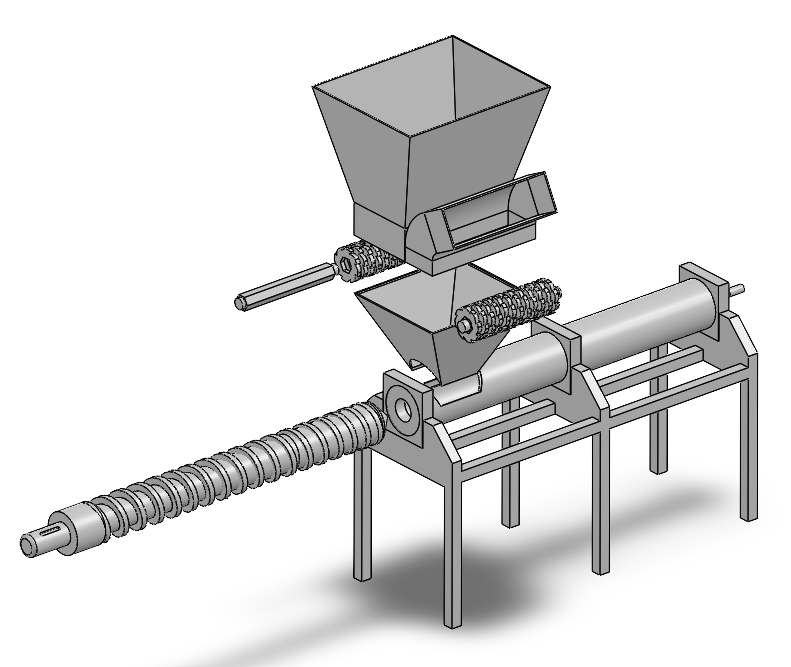
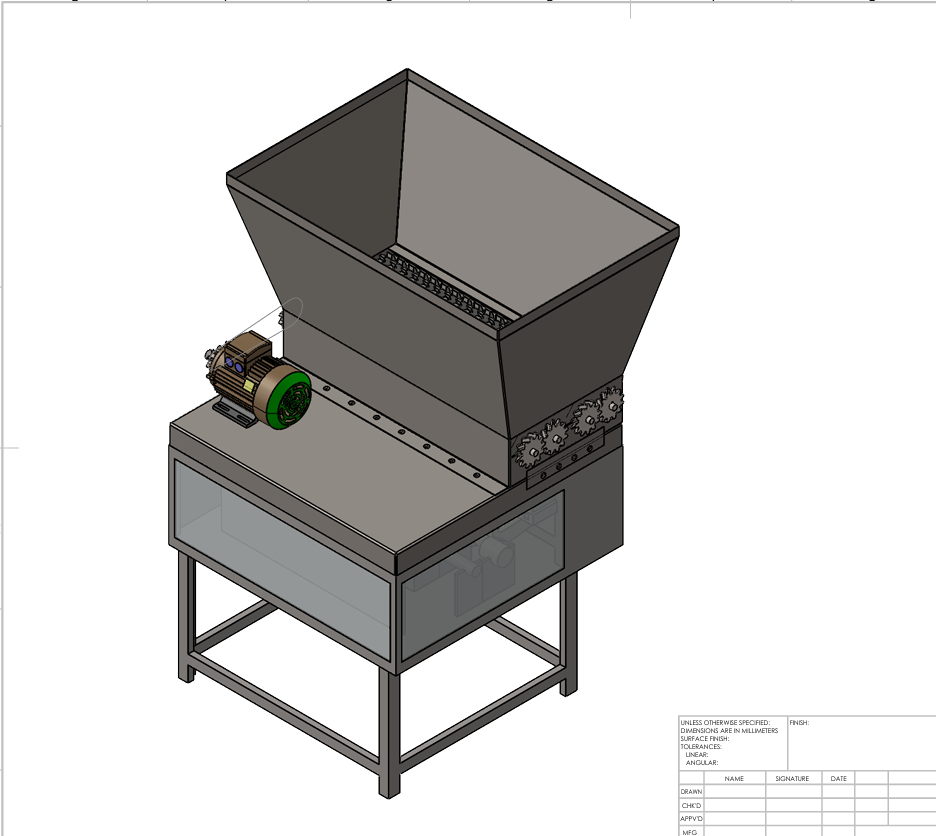
Designed a maize cob crusher and compactor to process crop residue into a densified, usable output, sizing the crushing mechanism and compaction chamber for the required throughput and structural load.
Design approach: Sized a rotor-based crushing mechanism to break down maize cobs before compacting the residue into a denser, more usable output — commonly repurposed as livestock feed or briquette feedstock.
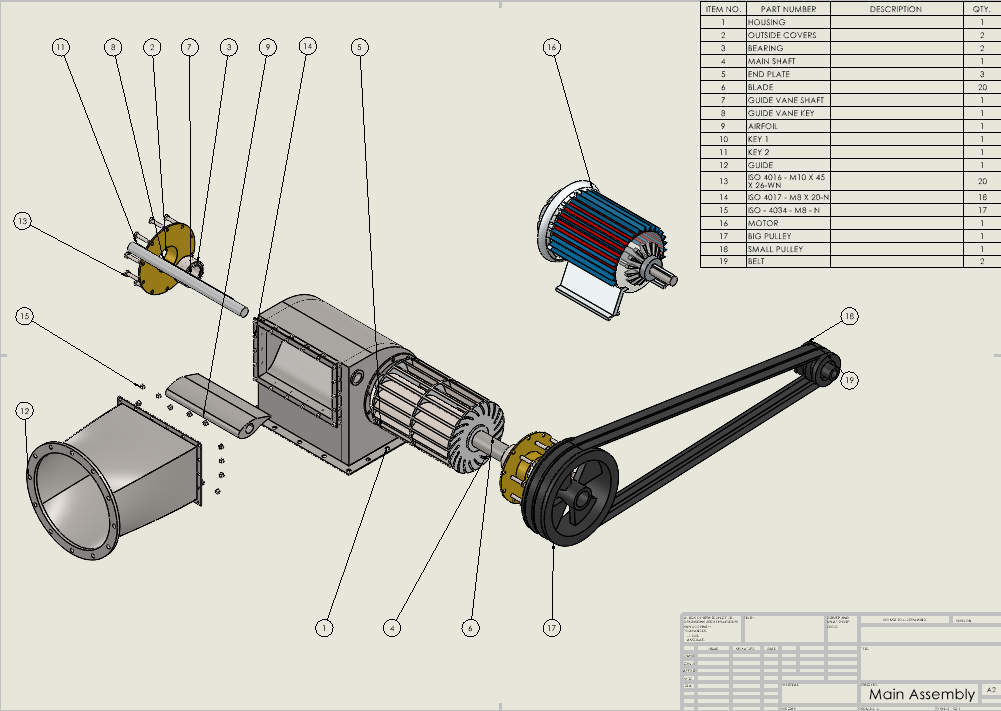
Designed a 7.74:1 compound reverted helical gearbox for a 78.5 kW drive, validated through AGMA gear-stress and shaft-fatigue analysis in SolidWorks.
Brief: 78.5 kW drive, reducing 1200 rpm input to 155 rpm output — a 7.7419:1 ratio — at a minimum Factor of Safety of 2.0, 20,000-hour service life, and 95% reliability.
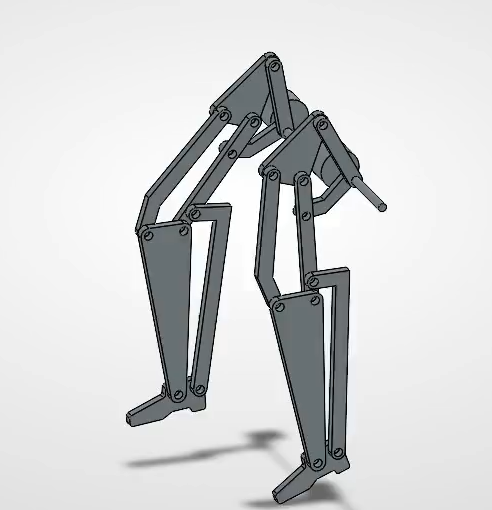
Designed a lower-limb prosthetic leg, modeling the socket, pylon, and joint assembly in CAD and evaluating structural strength under simulated gait loading to balance durability with weight.
Lower-limb prostheses are built around three core elements — a custom socket, a structural pylon, and articulating joint components — with alignment between them being the single biggest factor in comfort, stability, and gait efficiency.
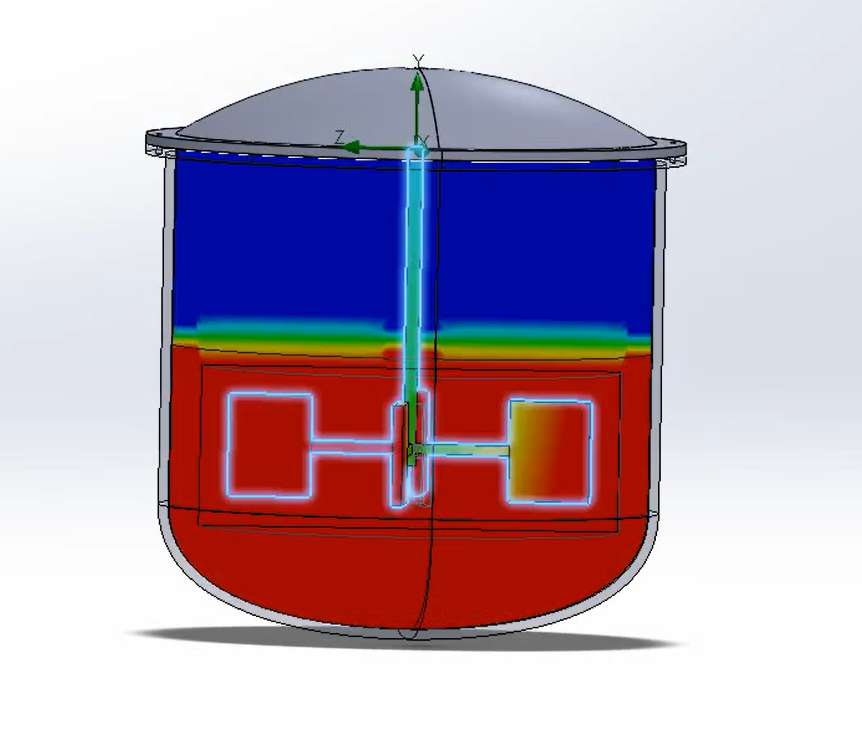
Modeled a process tank in SolidWorks and ran Flow Simulation to evaluate internal flow patterns, velocity distribution, and pressure drop.
Internal flow behavior was evaluated using SolidWorks Flow Simulation's finite-volume CFD solver, which meshes the actual fluid volume inside the tank rather than the solid geometry.

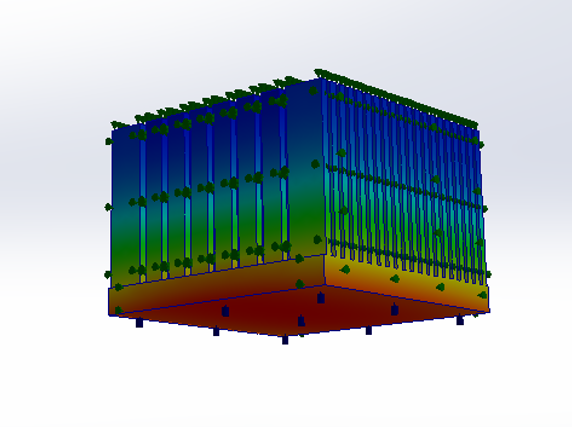
Simulated the thermal performance of a heat sink design, analyzing fin geometry and airflow to evaluate heat dissipation and surface temperature distribution under a defined thermal load.
Thermal performance was evaluated by simulating conduction through the heat sink body and convective heat loss from the fin surfaces, a standard approach for electronics-cooling design in SolidWorks.
Industrial attachments across manufacturing,
automotive, and academic workshops
Engineering software I use daily,
plus tools I explore on the side
Parametric CAD, assembly design & engineering drafting — Certified Professional (CSWP) & Associate (CSWA).
3D mechanical design and CAD/CAM integration for manufacturing-ready parts.
2D & 3D drafting and technical documentation.
CFD (Fluent, ICEM CFD) and FEA (Workbench) for flow, stress & thermal simulation.
Numerical analysis, control systems modeling, and engineering scripting.
Design of Experiments (DoE) and ANOVA for statistical process analysis.
On the side: I dabble in cybersecurity as a hobby - Cisco-certified in Ethical Hacking, comfortable in Kali Linux, and building small tools in Python, C/C++, SQL, and Flutter/Dart when taking a break from engineering.
Open to opportunities in mechanical design, thermofluid systems, manufacturing, and applied engineering research - or a conversation about turbines, CNC, or CFD.